Original Comic Art: What It Is, What It Is Worth and How to Protect It
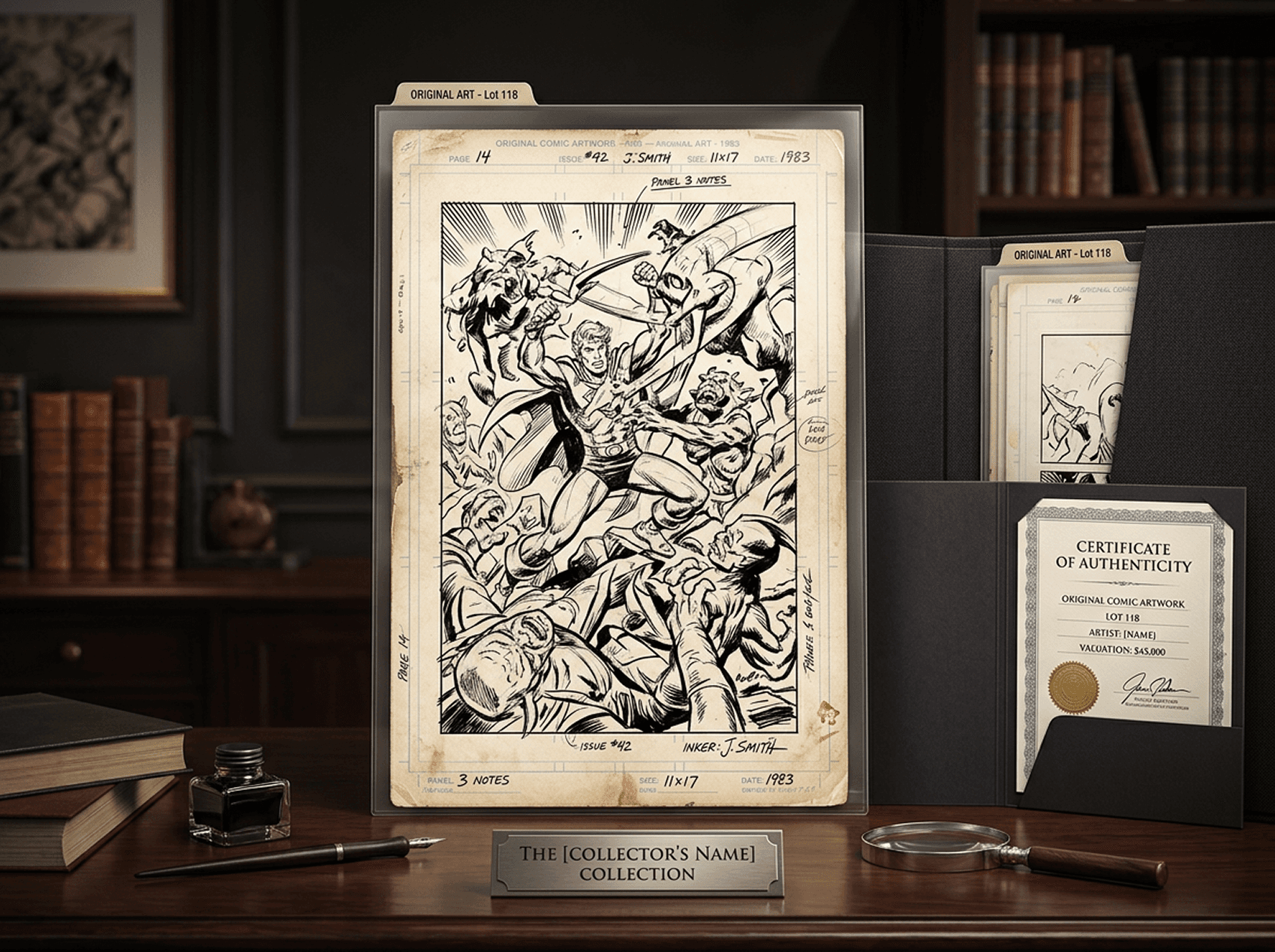
A published page of original comic art is a unique object. There is exactly one of it in the world. The page where Neal Adams drew Batman, the splash page where Jack Kirby opened a New Gods issue, the cover Frank Miller produced for a run of Daredevil: these are not reproductions of something else.
They are the thing itself, the physical object from which every printed copy derives. When one of these pages comes to market, it does not have a replacement. It does not have an equivalent. It has a price, and that price is set entirely by what the market decides at that moment.
Original comic art has quietly become one of the most significant categories in the broader collectibles market. Heritage Auctions, the largest auction house handling original comic art, has seen pages and covers achieve six and seven-figure results in recent years.
A Jack Kirby double-page spread from a 1970s Marvel title sold for over $480,000 in 2021. A Todd McFarlane Spider-Man cover achieved $3.36 million in 2021, setting a record for original comic art at auction.
For collectors who own significant pieces, the gap between what they paid and what their work is currently worth can be substantial, and the gap between what it is worth and what their insurance covers can be equally large. Understanding what specialist comic book insurance needs to look like for original art is the starting point for closing that gap.
What Counts as Original Comic Art
Original comic art is a broader category than most people assume, and the distinctions between types matter significantly for valuation and insurance purposes.
Published Pages and Covers
Published interior pages are the most common form of original comic art in the collector market. These are the physical boards, typically bristol board or similar, on which artists drew the original linework that was then reproduced in print.
Published covers are generally more valuable than interior pages because of their greater visibility and the premium collectors place on cover art across all collecting categories.
The value of a published page depends on a combination of factors: the artist, the character or characters depicted, the narrative significance of the page within the story, the era of production, and the physical condition of the board itself.
A page featuring a significant character moment by a recognised artist from a key story arc is worth considerably more than a transitional page by the same artist from the same run.
Preliminary Art, Sketches and Commissions
Preliminary art, meaning roughs, layouts and pencil sketches produced during the creation process, occupies a distinct market from finished published pages. Some collectors prize these for the insight they offer into an artist's working method.
Commission art, meaning pieces created specifically for collectors outside the published comics process, has grown significantly as a market category as conventions and direct artist relationships have made commissioning more accessible.
Convention sketches from significant artists can range from a few hundred pounds for a quick head sketch to several thousand pounds for a fully rendered commission from a highly sought-after creator.
The value is driven by the artist's profile, the complexity of the piece and the desirability of the character depicted. For collectors building significant original art holdings alongside their comic book collections, understanding how this market intersects with comic book insurance is worth doing before values climb further.
Original Covers and Splash Pages
Original covers and splash pages, the large single-image opening pages of a comic issue, consistently achieve the highest prices within the published art category.
These pieces were designed to be visually impactful as standalone images, which makes them more immediately appealing as display pieces and drives collector demand beyond what interior pages typically achieve.
A splash page by a significant artist depicting a key character can function as a standalone work of art in a way that a transitional middle page rarely does.
What Original Comic Art Actually Sells For
Rather than gesturing vaguely at the market, here is what the auction record for original comic art actually looks like at the significant end of the market.
| Work | Artist | Auction Result |
|---|---|---|
| Amazing Spider-Man cover | Todd McFarlane | $3.36 million (Heritage, 2021) |
| Silver Surfer double page spread | Jack Kirby | $480,000+ (Heritage, 2021) |
| X-Men cover | Jim Lee | $237,000 (Heritage, 2022) |
| Batman cover | Neal Adams | $600,000+ range (Heritage) |
| Wolverine first appearance page | Herb Trimpe | $657,250 (Heritage, 2014) |
| Detective Comics cover | Bob Kane studio | $179,250 (Heritage) |
These are the headline results, but the market extends significantly below these figures.
Pages and covers from Silver Age and Bronze Age runs by recognised artists regularly sell in the $5,000 to $50,000 range at Heritage and ComicLink. Convention commissions from sought-after contemporary artists trade between £500 and £5,000 depending on artist profile and piece complexity.
The breadth of the market means original comic art is accessible at many price points, but the irreplaceability principle applies regardless of where on the value spectrum a piece sits.
This is precisely why specialist collectibles insurance for original art needs to be built from genuine market knowledge rather than generic contents frameworks.
The Authentication and Provenance Challenge
Original comic art presents a specific authentication challenge that distinguishes it from graded comics and trading cards.
There is no CGC for original art. There is no standardised grading company that examines a page, certifies its authenticity and assigns a numerical grade.
Provenance is everything, and provenance is assembled from a combination of sources that vary in reliability.
The strongest provenance for a piece of original art is a direct chain of ownership from the original publisher or artist. Many significant pages can be traced through dealer records, auction house cataloguing and collector community documentation.
Heritage Auctions maintains detailed provenance records for pieces that pass through their platform, which provides a significant authentication anchor for works that have been through their process.
For pieces without clear auction house provenance, authentication relies on expert opinion, physical examination of the board and materials, comparison with known examples of an artist's work, and in some cases correspondence or documentation from the artist or their estate.
The absence of a standardised system means that authentication disputes are not uncommon in the original art market, and any collectibles insurance or valuation approach needs to account for the additional complexity this creates compared to graded comics or trading cards where certification is well established.
Why Fine Art Insurance Frameworks Do Not Work for Original Comic Art
The obvious insurance category for original comic art is fine art insurance or artwork insurance, and indeed some collectors use fine art policies to cover significant pieces.
The problem is that standard fine art insurance frameworks were built around a very different market, one with established auction house infrastructure, standardised condition terminology, and a long history of professional appraisal.
Original comic art sits awkwardly within these frameworks for several reasons. The valuation references are specialist auction results from Heritage and ComicLink that a generalist fine art insurer may not consult or understand.
The condition assessment for a comic art board involves factors specific to the medium, including paper aging, correction fluid use, paste-up additions and pencil residue under ink, that a fine art appraiser assessing oil paintings is not trained to evaluate.
The market for original comic art can move significantly in response to factors such as a new film adaptation of a character, that a generalist insurer has no mechanism for tracking.
The result is that a collector with a significant piece of original art under a standard fine art insurance or artwork insurance policy may find at claim time that the insurer's assessment of value bears little resemblance to what the market would actually pay.
This is the same agreed value problem we cover in detail in our guide to agreed value insurance.
The case for specialist comic book insurance that understands the original art market is particularly strong precisely because generalist fine art and artwork insurance frameworks consistently fail to capture what makes original comic art valuable.
Documenting Original Comic Art for Insurance Purposes
The absence of a standardised grading system makes documentation more important for original art than for almost any other collecting category.
A well-documented piece is significantly easier to insure and to settle a claim on than one whose provenance and value are vague.
For each significant piece of original art, record the following:
- Artist name and any co-creators involved in the page.
- Publication details if a published page: title, issue number, page number and approximate date.
- Physical dimensions of the board.
- Medium used: pencil, ink, mixed media, digital components if any.
- Condition notes: paper aging, any corrections, paste-ups, tears or restoration.
- Provenance chain: where and when you acquired it, from whom, at what price.
- Authentication documentation: auction house records, dealer certificates, artist signatures.
- Recent comparable sale from Heritage Auctions, ComicLink or specialist dealers.
- Photographs: full board front and back, any signatures or annotations, detail shots of significant sections.
This level of documentation is what makes a meaningful agreed value conversation possible.
Without it, any insurance discussion defaults to a generic estimate that will not survive a serious claim. Our broader guide to comic book valuation and our collection documentation guide cover the underlying principles in detail.
Convention Buying and Transit Risks
Thought Bubble, MCM London and specialist comic art events are where a significant proportion of original art changes hands in the UK collector market.
Our Thought Bubble 2026 guide covers the specific risks of buying at conventions in detail, but it is worth reiterating the core point here: a piece of original art you buy at a convention is inadequately protected by standard home insurance from the moment you hand over the money.
It is in transit, it is away from home, and it may not be covered under your existing policy until it physically arrives at your insured address.
For collectors who regularly buy at conventions or commission work directly from artists, the transit and away-from-home gap in standard insurance is not an edge case. It is an everyday risk.
Our movie memorabilia insurance guide covers the closely related provenance and transit challenges for signed and authenticated pieces, and the same principles apply directly to original art.
The first appearances and key issues guide is also worth reading alongside this one for collectors whose original art holdings intersect with key issue collecting.
A Note from Comicsure
Comicsure is building specialist collections cover for UK collectors that takes original comic art seriously as a category.
The combination of genuine irreplaceability, a well-developed but specialist auction infrastructure, and valuation challenges that neither standard contents insurance nor generalist fine art insurance or artwork insurance handles well makes this one of the most interesting and complex areas of the collector market to get right.
You can read more about how we are thinking about this on our comic book insurance and collectibles insurance pages.
If you collect original comic art, whether published pages, covers, commissions or preliminary work, and have wondered whether your current cover actually reflects what your pieces are worth, we would genuinely like to hear about your collection.
Tell us about your collection at Comicsure and help us understand what serious UK original art collectors actually own and need.
Related Reading
-
First Appearances, Key Issues and Variants: Why These Comics Need Specialist Insurance
-
Movie Memorabilia Insurance: Protecting Props, Posters and Signed Pieces
-
What Does Agreed Value Insurance Really Mean for Collectors?
-
When Is the Right Time to Get Your Comics Valued? A Guide for UK Collectors
-
Thought Bubble 2026: The Collector's Guide to Yorkshire's Biggest Comics Weekend
-
Is Your Comic Collection Properly Documented? Why Inventory Matters Before You Insure